Communication and connection
Not all challenges show up as big behaviors. Some children struggle quietly with communication—finding the right words, expressing feelings, understanding others, or asking for help. This page is here to help you understand what your child may be experiencing and give you simple, practical ways to support them at home.
Remember! Communication looks different for every child—but every child deserves to be understood.
Understanding your child's communication
Communication is a skill that can be taught, supported, and strengthened over time. Every child can grow as a communicator. Progress may look different for each child, but with the right support, encouragement, and opportunities to practice, communication skills can improve in meaningful ways.
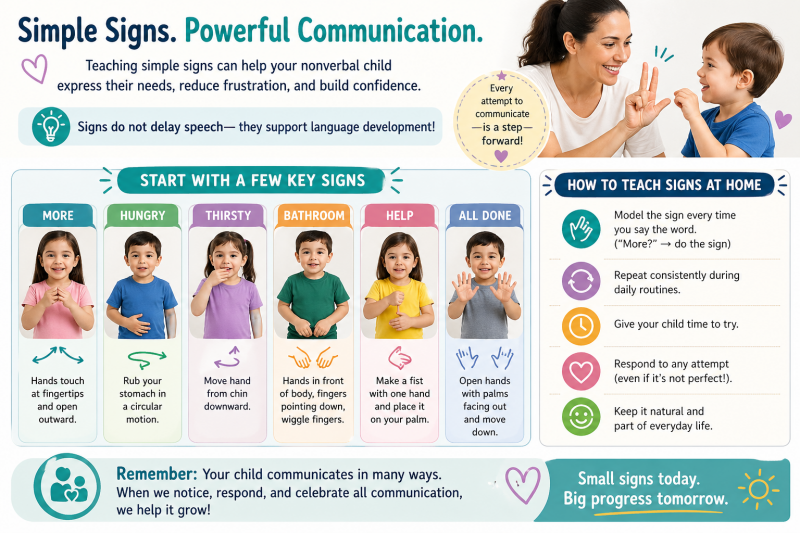

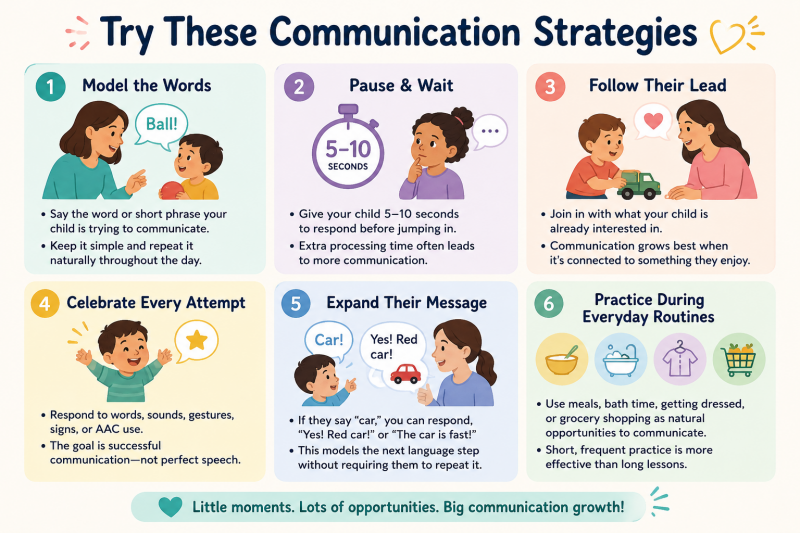
Supporting communication at home
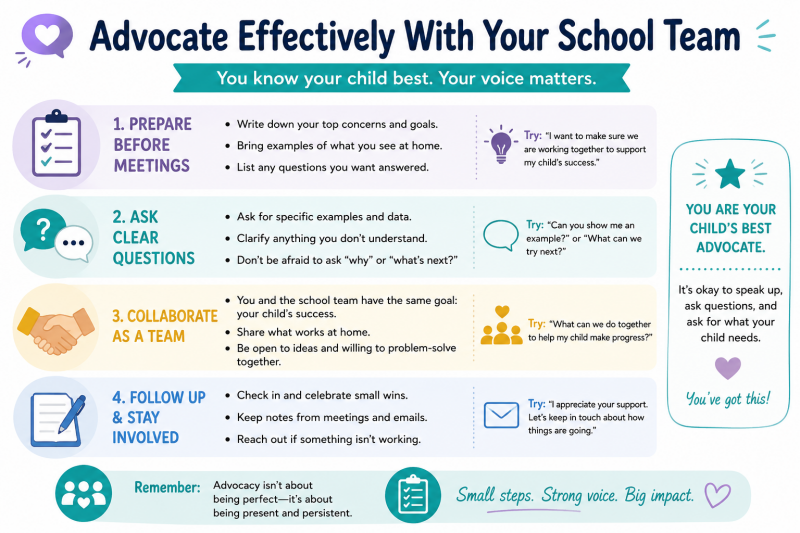
Effective communication is one of the most powerful tools you have as a parent. When you share what you see at home, ask questions, and stay connected with your child’s teachers and support team, you help create a clearer picture. Whether your child uses words, gestures, or a communication device, these two guides provide simple, practical ways to support communication at home and help you feel more confident speaking up about your child’s needs.

Many parents struggle because they don’t always have the words, confidence, or clarity to explain their child’s needs—or to ask the right questions when something doesn’t feel right. This can lead to feeling intimidated in meetings or not understanding school language. This page is designed to make that easier.
Gain confidence in your communication
Here's what you'll be able to do with the help of this page:
- Notice and be able to describe how your child typically communicates
- Try one or two at-home strategies tonight
- Ask your child's teacher one focused question about supports that work at school